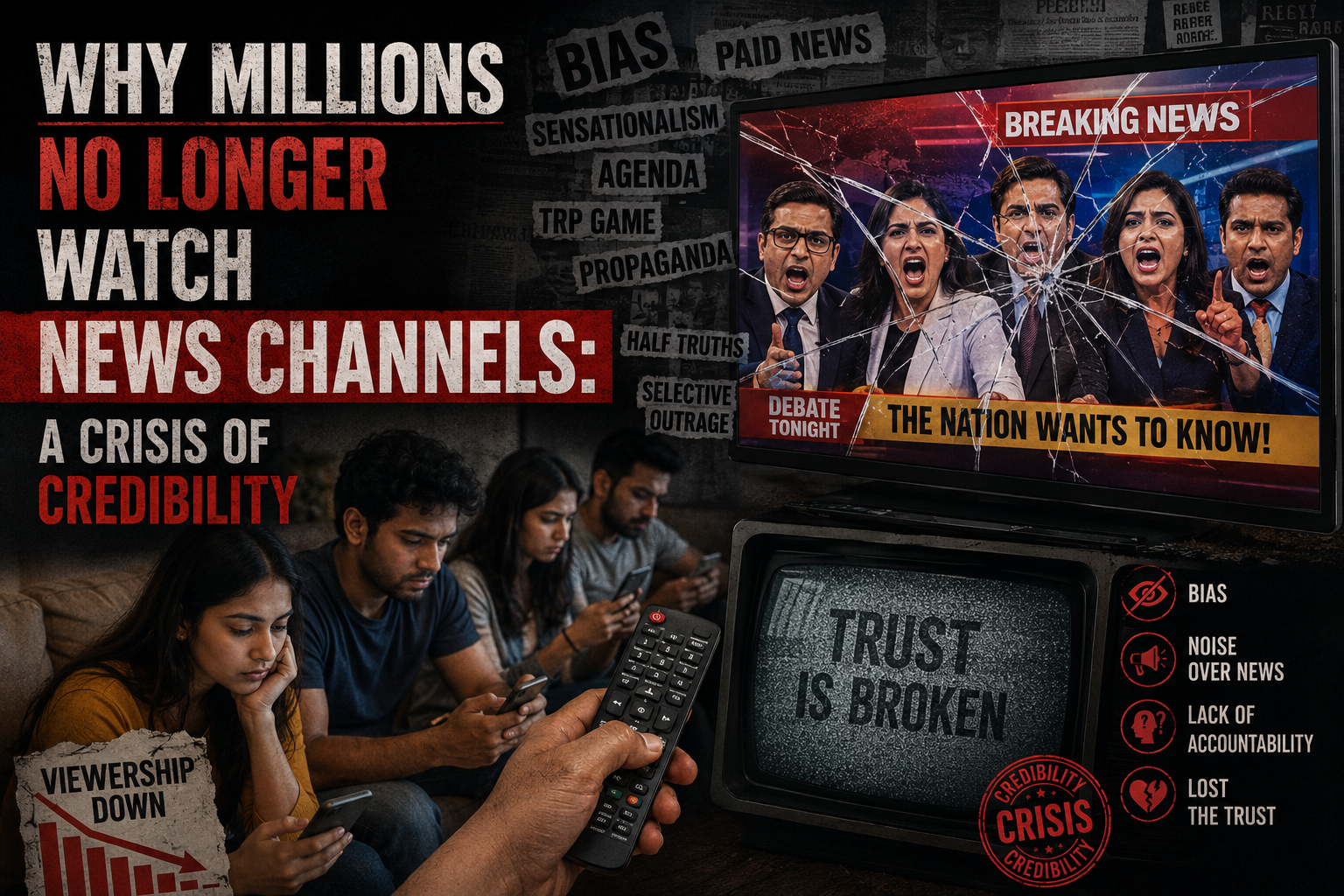
Why millions no longer watch news channels: A crisis of credibility

  • | Wednesday | 29th July, 2026

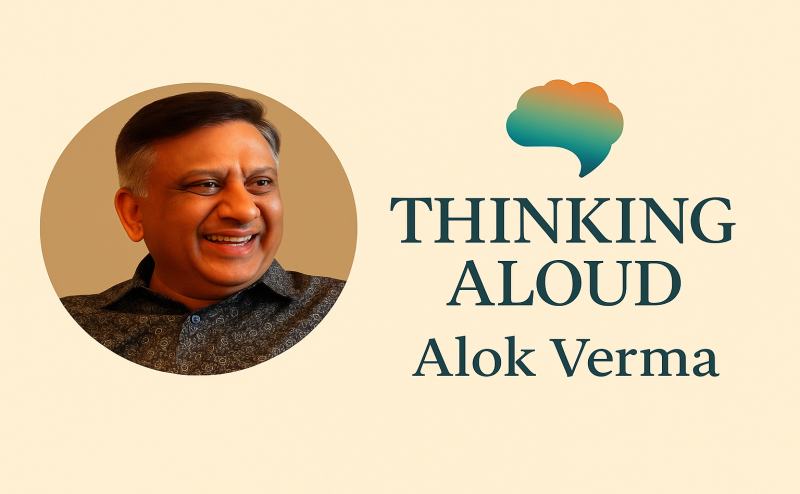
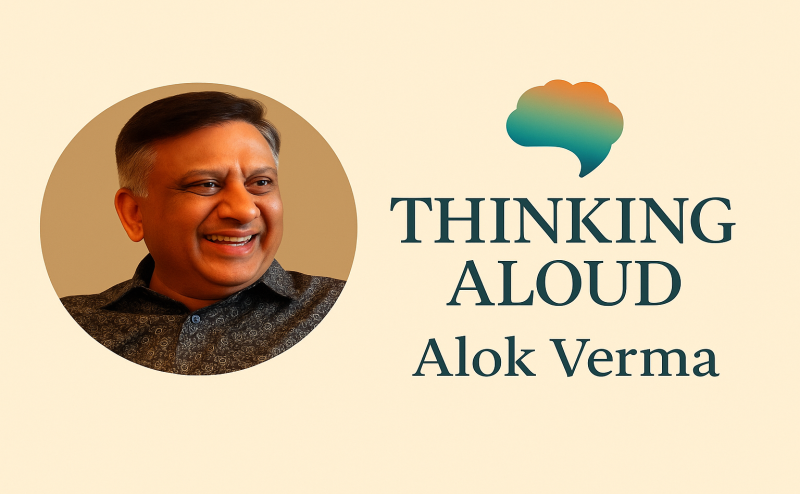
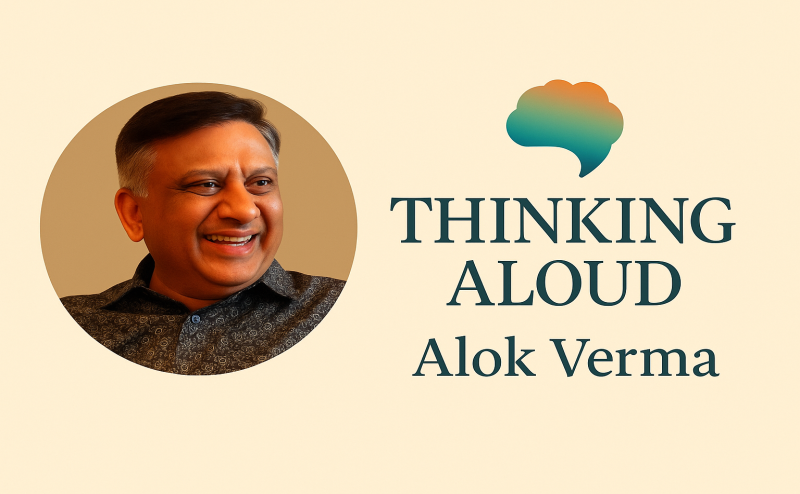
BY-Alok Verma

Every institution can survive criticism. Very few can survive the loss of trust. Journalism is one of them. Journalism rarely loses public trust because of one sensational mistake or one inaccurate broadcast. Credibility erodes far more quietly. It is weakened by hundreds of editorial decisions that, taken individually, appear routine but collectively redefine the profession’s relationship with its audience. A headline that privileges allegation over evidence, a debate that rewards confrontation over inquiry, a story that amplifies political theatre while leaving the central public-interest question unexplored—none of these may seem decisive on its own. Together, however, they shape a deeper public perception: is journalism still helping citizens understand reality, or is it increasingly shaping that reality through predetermined narratives?

Having spent more than four decades in print, television and digital journalism, I believe this is the most important question confronting Indian television news today. I have watched Indian news acquire unprecedented reach, speed and technological power. Yet a troubling contradiction now confronts the profession. Television news has never been more visible, but the credibility of several of its most influential channels—including Aaj Tak, Times Now, Zee News, CNN-News18 and their regional counterparts—is being questioned with an intensity that cannot be dismissed merely as partisan hostility.

This is not an indictment of every television journalist. Many reporters continue to work courageously, often under difficult conditions. Nor does every programme on these channels conform to one editorial pattern. The concern is more specific: a powerful, anchor-driven segment of television news has repeatedly appeared to set the political frame of a story before adequately investigating its central public-interest questions.

Credibility is rarely lost through one spectacular falsehood. It erodes through accumulated editorial choices—what receives prominence, what is pushed aside, which allegation becomes the headline and which question is never seriously pursued.

The Gen Z moment was a mirror, not the beginning

The recent youth protests did not create this distrust. They revealed how deeply it had already travelled. Reporters and crew members from several mainstream channels were heckled during the demonstrations and the Times Now reporter Dev Kotak was physically assaulted by protesters chanting “godi media.” The assault was indefensible. No anger against editorial conduct can justify violence against a reporter. Equally important was Editors Guild of India warning that flawed and biased reporting will have serious consequences for society and will weaken the media’s position as a pillar of democracy.

That dual recognition is important. Journalism must defend reporters from intimidation but it must also examine why many citizens no longer see them simply as independent witnesses. The phrase “godi media,” widely associated with Ravish Kumar’s criticism of deferential television journalism, gained currency because it expressed a public perception: that sections of the news industry had become insufficiently questioning of the government and disproportionately aggressive towards dissent. Whether every use of the label is fair is not the central issue. The question journalism must confront is why the description became so instantly recognizable.

How prime-time began framing the story

The farmers’ movement provides one of the clearest documented examples. The essential questions concerned the provisions of the three farm laws, minimum support prices, procurement, federal consultation and the economic future of cultivators. Yet several broadcasts repeatedly foregrounded Khalistani influence, political infiltration and the alleged anti-national character of the movement. In 2021, the News Broadcasting and Digital Standards Authority found that Zee News had violated broadcasting standards in programmes linking the farmers’ protests with Khalistanis. It also found that the channel had falsely reported that the national flag had been removed from the Red Fort.

The journalistic issue was not whether separatist involvement or violence should be investigated. They certainly should. The issue was whether such allegations were proportionate to the available evidence and whether they displaced the substantive dispute over agricultural policy.

The same tendency was visible after the security breach involving Prime Minister Narendra Modi’s convoy in Punjab in January 2022. A grave security lapse plainly deserved investigation. But documented reviews of television coverage by News18, Zee News and Aaj Tak showed that speculation rapidly expanded into theories of an assassination conspiracy, Maoist involvement and proximity to Pakistan. Aaj Tak’s Halla Bol focused on whether farmers had prior knowledge of the route, while other relevant footage and competing questions received limited examination.

Here again, the problem was not scrutiny. It was the blurring of established fact, political allegation and anchor inference. When an unproven possibility becomes the organizing premise of a programme, journalism stops helping viewers assess evidence and begins guiding them towards a conclusion.

The more recent coverage of Sonam Wangchuk fasting in support of Cockroach Janata Party agitation offers a contemporary case. Rather than keeping the focus on students demands, prime-time presentations on Republic TV, Zee News, Times Now Navbharat and News18 reportedly framed Wangchuk as a possible instigator, linked the agitation with Nepal’s Gen Z unrest or an “Arab Spring” strategy and speculated about foreign participation. Questions about violence, foreign influence or political strategy are legitimate. But they should supplement—not replace—an examination of the movement’s stated demands and the government’s response.

These examples do not prove that every channel follows government instructions, nor do they establish the private motives of individual anchors. They demonstrate something more verifiable: on several consequential issues, the politically charged frame received greater prominence than the underlying institutional question.

The rise of an alternative public square

Television no longer enjoys a monopoly over public discourse. Millions of citizens now carry cameras in their pockets. Every protest produces livestreams, Instagram Reels, YouTube reports, X threads and independent digital investigations. Every speech is compared with the full video. Every edited clip is challenged by another angle uploaded within minutes.

Technology has democratized journalism. That does not mean social media is inherently more truthful. Independent digital journalism has grown partly because television left this space open. But it would be equally simplistic to portray independent journalists as entirely unbiased truth-tellers. Ravish Kumar, Ajit Anjum and other digital journalists make editorial selections, emphasize certain subjects and reflect recognizable perspectives. Their work should therefore be judged critically, like all journalism. Their significance lies not in being automatically neutral, but in frequently presenting locations, testimonies and interpretations that receive insufficient space in major television studios.

Digital journalists such as Ravish Kumar, Ajit Anjum and several others have nevertheless demonstrated one important reality. There remains a substantial public appetite for field reporting that gives viewers direct access to places, people and experiences rather than only studio interpretations. Their rise gives audiences an alternative version. Viewers can now compare a channel debate with a field report, an official statement with a protester’s testimony, or a carefully edited package with an uninterrupted digital video. That does not guarantee truth. Social media is also filled with misinformation, selective editing and propaganda. But it has ended television’s monopoly over the narration of public events.

The Reuters Institute’s 2026 Digital News Report recorded trust in news in India at 39%, down four percentage points in one year. It also found that platforms had overtaken both television and news websites globally as sources of news. The message is unmistakable: audiences are no longer dependent upon one medium, one newsroom or one anchor.

Authority must now be earned every day

Technology has democratized journalism. Authority must therefore be earned every day. A famous logo, a powerful owner, a celebrated anchor or national reach can command attention. None can permanently command trust. That must come from accuracy, fairness, transparency and the courage to question every centre of power with equal conviction.

The Gen Z protests were not a verdict against one government, one political party or one news channel. They were a mirror held before an entire profession. They showed what happens when a generation believes that its lived reality is being reframed rather than reported. Indian television transformed journalism once. It brought immediacy, visual power and national participation into millions of homes. It can transform itself again—but only by returning to reporting over rhetoric, evidence over insinuation and public-interest questions over politically convenient narratives.

Democracies do not need media that merely amplifies the powerful. They need journalism that helps citizens understand reality, particularly when that reality is inconvenient to those who exercise power. In the digital age, credibility is no longer inherited. It must be earned—story by story, question by question, every single day.

(The writer is a national award-winning senior journalist and founder Newzstreet Media)


If You Like This Story, Support NYOOOZ

NYOOOZ SUPPORTER

NYOOOZ FRIEND

Your support to NYOOOZ will help us to continue create and publish news for and from smaller cities, which also need equal voice as much as citizens living in bigger cities have through mainstream media organizations.


Stay updated with all the Delhi Latest News headlines here. For more exclusive & live news updates from all around India, stay connected with NYOOOZ.

Related Articles